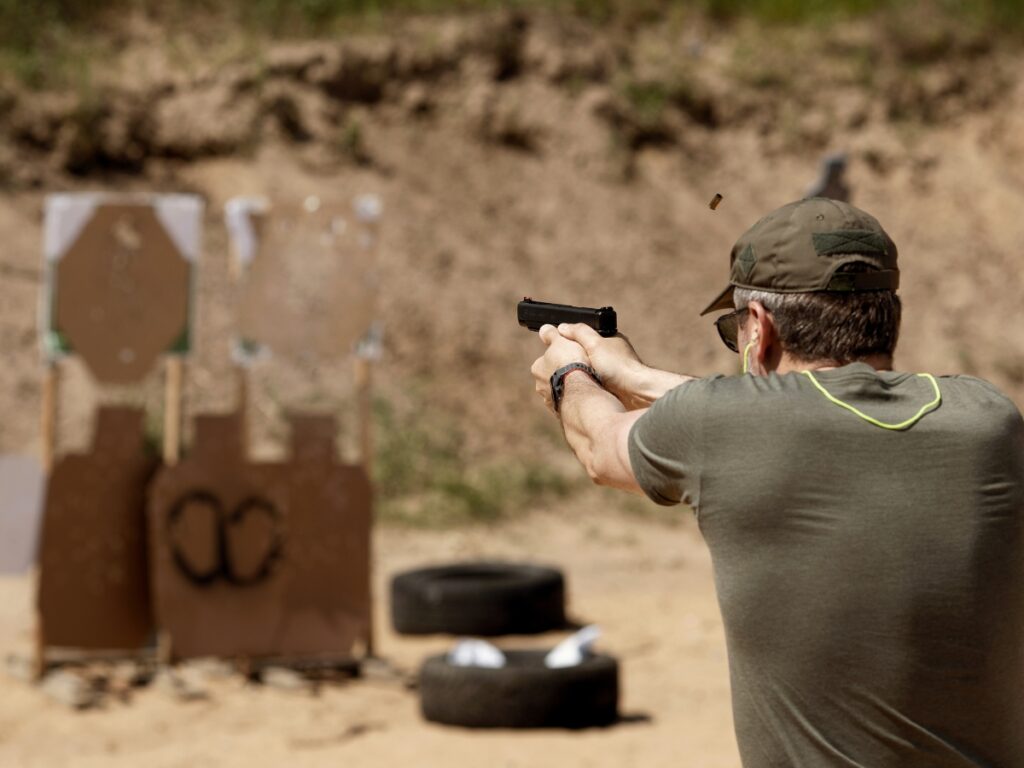
Owning or carrying a firearm comes with serious responsibility, and basic instruction is only the starting point. Advanced firearms safety training in Atlanta is designed for individuals who want to strengthen their skills, improve decision-making under pressure, and deepen their understanding of safe handling in real-world scenarios.
This level of training goes beyond fundamentals, focusing on situational awareness, defensive techniques, proper storage practices, and lawful use of force. In a growing city like Atlanta, where personal safety and legal compliance matter equally, structured advanced training helps build confidence while reinforcing disciplined habits.
Whether you are a responsible gun owner, security professional, or someone seeking higher-level preparedness, advanced firearms safety training in Atlanta equips you with the knowledge and practical experience needed to handle firearms safely and responsibly in complex situations.
If you are looking for training that takes firearms safety seriously and keeps it practical, 4Horsemen positions its Atlanta programs around real-life decision making, responsible handling, and clear standards that hold up under stress.
Instead of treating safety as a quick checklist, the training is framed as a repeatable system: how you store and handle a firearm, how you communicate boundaries with others in the home, and how you reduce risk during everyday routines.
A major advantage of in-residence training is context. Learning safe habits in a classroom is helpful, but many accidents and close calls happen at home, often because routines break down or because people assume “it will never happen here.” Training in the same environment where you store, carry, or stage equipment can make the safety conversation more realistic.
It also allows the instructor to address the most common problem areas that get overlooked, like where people tend to set things down, how children or guests move through the space, and how to build habits that stay consistent when you are tired, distracted, or rushed.
At its core, firearms safety is about reducing preventable risk. That includes safe handling fundamentals, clear household rules, thoughtful storage, and a mindset that prioritizes control over confidence. The goal is not to feel fearless. The goal is to be prepared, consistent, and responsible.
Instructor background matters most when it translates into calm, structured teaching. 4Horsemen describes its instructors as coming from professional public-safety and federal backgrounds, which can be valuable when the training stays focused on how people actually behave under pressure.
Real experience tends to highlight the same lesson again and again: most dangerous outcomes come from preventable mistakes, rushed decisions, and unclear communication, not from a lack of gear.
In a safety-first program, that experience should show up as attention to detail. You want training that reinforces safe handling standards every time, not only at the beginning of the session. You also want coaching that can spot small issues early, such as inconsistent muzzle awareness, poor trigger discipline habits, or unsafe “casual” handling that creeps in when people relax.
Experienced instructors are also more likely to emphasize situational awareness and boundaries without turning the training into a performance. Safety training should help you slow down, verify what you think you know, and make choices that reduce risk for everyone around you.
That approach supports firearms safety in a way that is practical for households, especially when more than one person will be around the firearm.
A customized curriculum is most helpful when it connects safety skills to the way you actually live. That includes who is in the home, what daily routines look like, where distractions tend to happen, and how to prevent avoidable access. It is one thing to understand safety rules in theory, but it is another to build habits that are consistent when life gets busy.
Customized training can also support better communication. In many homes, the biggest safety gap is not knowledge. It is assumptions. People assume someone else unloaded the firearm, someone else locked it up, or someone else explained the rules to a visitor. A structured program can help families align on simple, repeatable expectations so safety does not depend on memory or mood.
Another benefit of tailoring is pacing. Some people need more time building comfort with safe handling basics before they can apply those skills in more dynamic settings. Others need help unlearning bad habits picked up from casual practice. The right curriculum meets people where they are, then builds competence through repetition and clear feedback.
A home-based assessment, when handled responsibly, can be a useful way to identify risk points and improve safety planning. This is less about “tactics” and more about common-sense prevention: safe storage choices, access control, and reducing situations where a mistake could happen.
For many households, improving firearms safety starts with practical questions. Where is the firearm stored when it is not in use? How is it secured? Who has access? How do you handle days when routines change?
Responsible ownership also includes planning for the unexpected. That can mean discussing what to do if a firearm is discovered by someone who should not have access, how to handle guests, and how to respond if someone in the home is uncomfortable. Safety is not only mechanical. It is also behavioral, and that is where training can be most valuable.
If your goal is to build consistent, real-world habits, the best programs will keep the focus on prevention, clear rules, and repeatable standards. Firearms safety is not something you “learn once.” It is something you practice until it becomes automatic.
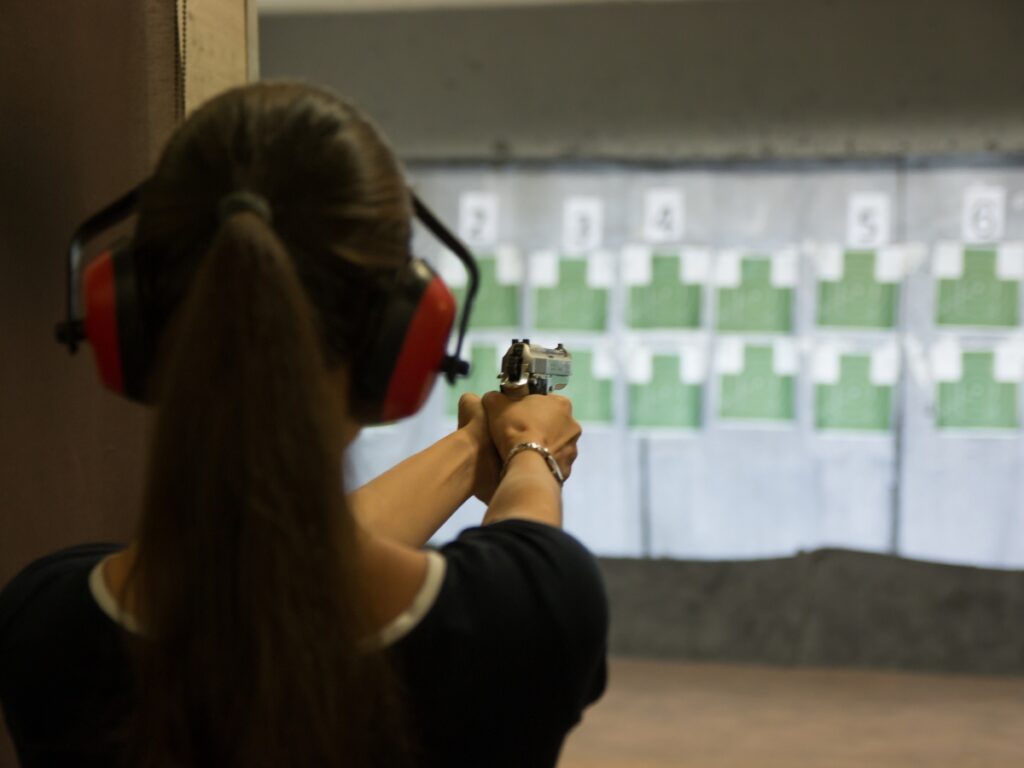
When people look for advanced classes, they often want more than marksmanship. They want structured practice that reinforces safe handling, builds better decision-making, and helps them stay calm and consistent when conditions are not perfect.
In Atlanta, advanced firearms training programs commonly center on firearms safety training, home active threat preparation, and active shooter response concepts. Even when the focus is “advanced,” the best courses keep returning to fundamentals, because the biggest safety problems usually come from rushed handling, unclear roles, or habits that are fine at the range but risky at home.
A solid program also separates skills from scenarios. Skills are things like safe loading and unloading, muzzle awareness, trigger discipline, and safe movement with a firearm. Scenarios are where you apply those skills with constraints, like limited space, low light, or the need to communicate with others.
That structure matters because it keeps firearms safety at the center, instead of letting scenario pressure push people into sloppy handling.
Advanced pistol training typically builds on basic shooting and focuses on how to run the firearm safely and predictably while you are moving, communicating, or working around obstacles.
Most programs include drills that sharpen accuracy and speed, but the more useful emphasis is on repeatable process: how you draw and re-holster safely, how you manage malfunctions without rushing, and how you move through tight spaces without breaking safe handling rules.
In-home or home-focused training is often described as “real-world,” but the value is really about relevance. Practicing movement in hallways, doorways, and common living areas forces you to slow down and think clearly about angles, bystanders, and what safe control looks like in confined spaces.
It can also help you set household safety standards that do not depend on memory, such as how firearms are stored when not in use, what “safe status” means in your home, and how to communicate during stressful moments. That kind of planning supports firearms safety because it reduces improvisation.
Some courses also include a family component. This does not mean putting everyone into high-intensity drills. It usually means establishing simple protocols, clarifying who does what during an emergency, and making sure the plan does not create new safety risks. A safe plan is one that can be followed under stress without cutting corners.
Tactical carbine training generally focuses on safe rifle handling, efficient manipulation, and responsible movement with a long gun in tighter spaces. The “proficiency” part is not only about shooting groups. It is about operating the carbine safely through common tasks like shouldering, transitioning positions, clearing stoppages, and moving with awareness of your muzzle direction at all times.
Because carbines are larger and easier to point unintentionally, training should emphasize control and discipline. You learn how to work around barriers, how to move without flagging areas you should not, and how to keep your finger off the trigger during every non-shooting moment.
A well-run carbine class also teaches you to slow down and verify decisions, especially when drills add speed or stress. That’s where firearms safety becomes real. It is not the rules you can recite. It is the habits you keep when the drill is pushing you to hurry.
Home-focused carbine training is sometimes offered as a way to match practice to the spaces you live in. If that is part of the program, the most useful outcome is clearer risk management. You learn what is workable, what is not, and how to avoid unsafe shortcuts. The goal is not to turn your home into a training maze. The goal is to build safe, consistent handling and a plan that does not rely on guesswork.
Before signing up, it helps to think about what “advanced” means for you. If you want safer handling under pressure, look for programs that clearly prioritize fundamentals and enforce standards throughout the session.
If you want home-oriented preparation, choose training that focuses on prevention, communication, and safe storage habits alongside skill work. No matter the format, firearms safety should show up in every drill, not only in the introduction.

A well-run course should treat firearms safety as the main subject, not a box to check before moving on. The most useful skills are the ones that reduce preventable mistakes at home and in controlled practice settings.
That starts with consistent safe handling habits, including always knowing where the muzzle is oriented, keeping your finger off the trigger until you are intentionally firing, and verifying the condition of the firearm every time it is handled or transferred.
A strong program also covers safe storage and access in a way that matches real life. That means understanding how storage choices change when there are children in the home, frequent visitors, or shared living spaces.
It also means learning how to transport and stage equipment legally and responsibly, without creating unnecessary risk. When instruction stays grounded in these fundamentals, firearms safety becomes a daily routine rather than something you only think about at the range.
Good instruction does not rely on hype or aggressive language. It relies on repetition, clear standards, and coaching that keeps safety rules intact even when a student feels rushed.
The best instructors break tasks into small steps, then add mild pressure only after safe handling is consistent. That pressure can be as simple as time awareness, environmental distractions, or verbal cues that require the student to pause, think, and communicate before acting.
It also helps when instructors explain the “why” behind each rule. People are more likely to follow safety procedures when they understand what goes wrong in common accidents, such as complacency during loading and unloading, assumptions about whether a firearm is unloaded, or casual handling in tight spaces.
Training that emphasizes calm repetition and decision-making is often more effective than training that chases intensity.
If a training program mentions “family integration,” it should not be framed as teaching family members to participate in dangerous situations.
The safer goal is creating clear household expectations that lower the odds of confusion. That includes agreeing on storage rules, setting boundaries about who can access firearms and when, and having simple communication scripts that are easy to remember during stressful moments.
Family planning can also include non-weapon elements that matter more in real emergencies, such as identifying safe rooms, rehearsing how to call for help, and deciding where to meet if people are separated. When the plan focuses on communication, supervision, and avoiding unnecessary exposure to danger, it supports firearms safety without encouraging risky behavior.
Scenario-based training can be helpful when it is designed to strengthen judgment, not to encourage confrontation. The biggest benefit is learning how stress affects attention and memory.
Under pressure, people often miss details, rush steps, or forget basic rules. A controlled scenario gives students a chance to notice those tendencies and correct them before they become habits.
The other benefit is communication. Many safety failures happen because people do not communicate clearly about what they are doing, where they are moving, or what they are holding.
Scenarios that require verbal check-ins, deliberate pauses, and clear decision points can improve safety culture. The goal should be better awareness, better restraint, and fewer impulsive actions.
Look for programs that clearly state their safety standards, enforce them consistently, and spend real time on storage, handling, and responsible decision-making.
A course that rushes past basics, dismisses questions, or treats safety as a quick disclaimer is not a good fit, even if it calls itself “advanced.” The best programs are willing to slow down, correct errors immediately, and keep expectations consistent from the first minute to the last.
If you are writing this for a general audience, it can help to frame firearms safety as a long-term practice. Skills fade when they are not reinforced, and safety routines only work when they are simple enough to follow every day. That is why the best training is the training that improves your habits, not your ego.
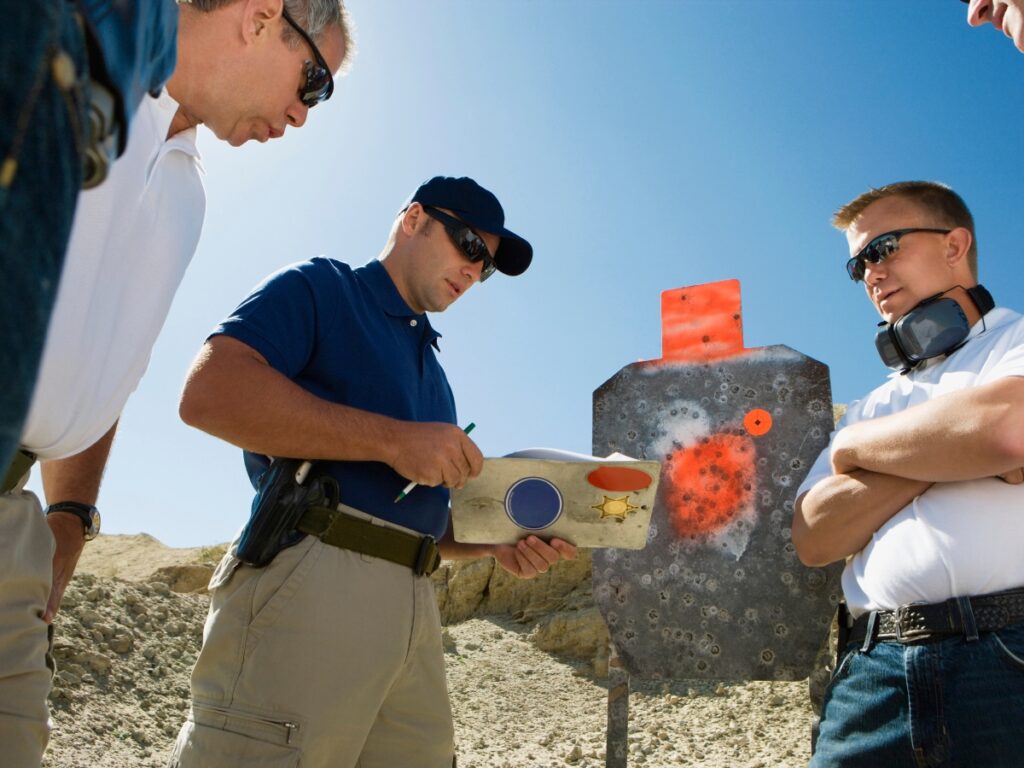
If you are looking for firearms safety training in Atlanta, the first step is to choose a provider whose instruction matches your goals and experience level. Some programs focus on first-time owners, while others are built for experienced shooters who want structured practice, coaching, and scenario-based learning.
Before you commit, it helps to confirm what the class actually covers, how much time is dedicated to safety fundamentals, and whether training happens on a range, in a classroom, or both.
In many cases, enrollment is handled directly through the provider’s scheduling process. That usually means reviewing available class dates, selecting the course level, and completing any required forms.
If you are enrolling as a household, ask whether the program includes guidance on safe storage and home rules, since those are often where real-world firearms safety habits are built.
Most advanced programs follow a similar path, even if the course format varies. You start by confirming prerequisites, since some classes require basic safe handling experience or prior instruction.
From there, you choose a session based on your availability and whether you want one-on-one coaching or a group class setting. If the program offers any kind of skills evaluation, that step can help place you in the right level so you are not pushed too quickly or held back by overly basic material.
Before attending, you should also clarify what equipment is expected and what is provided. A responsible provider will be specific about what to bring, what is optional, and what is not allowed.
They should also explain how they run a line, how they correct safety issues, and what happens if someone repeatedly ignores directions. These details matter because they tell you whether the program treats firearms safety as the foundation, not an afterthought.
If you are enrolling to improve readiness for high-pressure situations, look for programs that emphasize judgment, safe handling under time pressure, and clear stop points. The goal of advanced training should still be safe decision-making, not speed for its own sake. A course that cannot explain how it maintains control and safety during drills is not a course you want.
If a provider does not list a facility address publicly, that is not automatically a red flag, but you should still confirm the training location in writing before you arrive.
Some organizations train at partner ranges, rotate locations, or offer on-site instruction depending on the course format. When you ask for the location, also ask what the session includes, how long it runs, and what the safety brief covers at the start of class.
It is also smart to confirm accessibility details ahead of time. Ask about parking, check-in procedures, and whether there are any facility rules that could affect your equipment or clothing choices. If you are traveling across Atlanta traffic, getting these details early prevents delays that can make the start of a class feel rushed
Advanced firearms safety training goes beyond basic handling to develop the situational awareness, tactical decision-making, and stress management skills essential for responsible gun ownership.
Whether for personal protection or professional development, advanced instruction ensures you are prepared for real-world scenarios with confidence and precision.
For expert-led advanced firearms training in Atlanta, trust the certified professionals at 4Horsemen Investigation & Security. Ready to elevate your skills to the next level? Call 404-680-0860 or visit our website for a free consultation today. Let our experienced instructors help you become a more proficient, responsible firearm owner.